
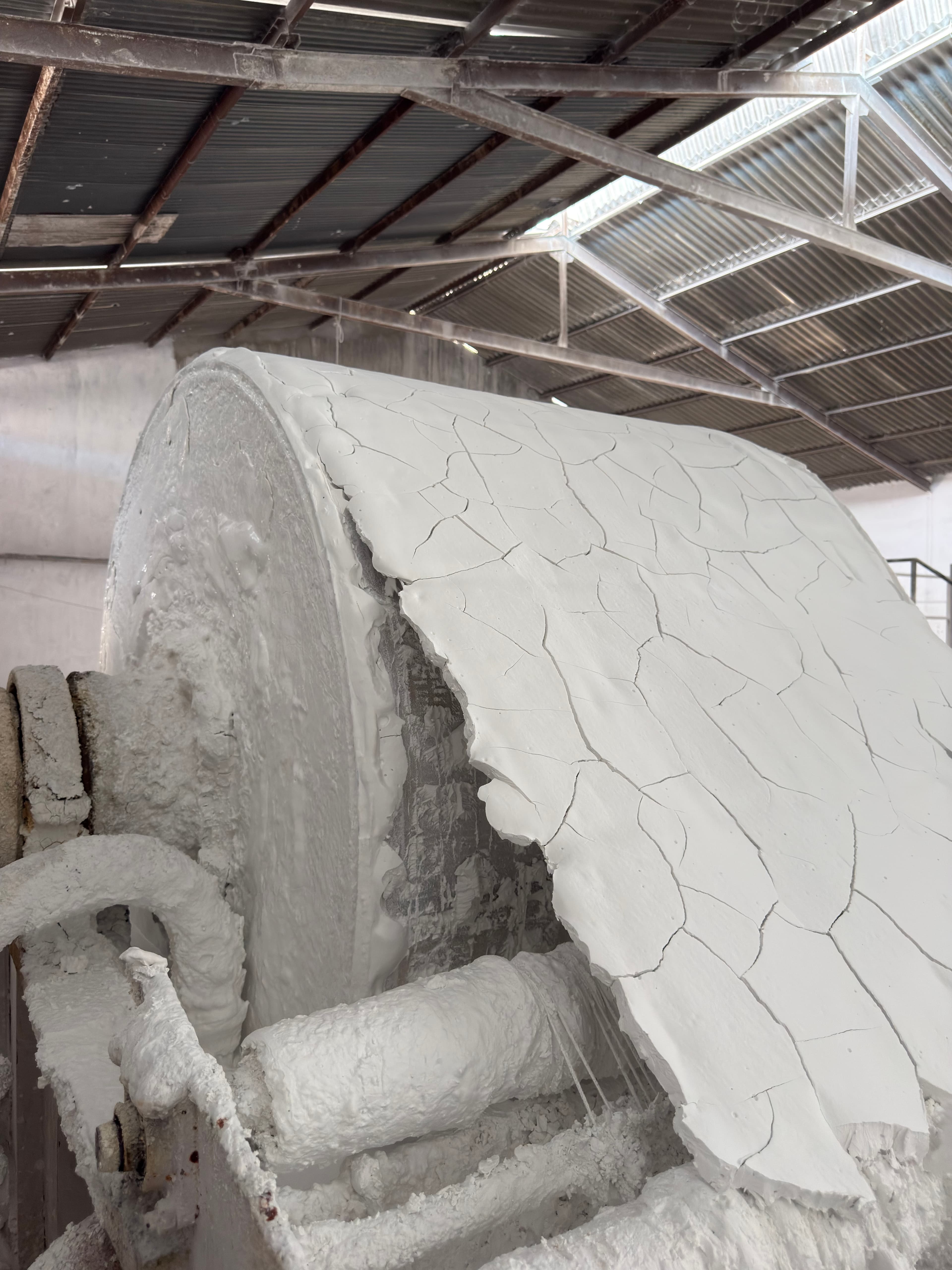
Ground Calcium Carbonate (GCC)
Processed mechanically from premium natural white calcite mineral deposits to deliver high whiteness and cost-effective filler properties.
Micronized Calcite Powders
KLC's Ground Calcium Carbonate (GCC) is processed from carefully selected, high-purity natural white calcite crystal. Utilizing our advanced, automated ultrafine grinding mill, the raw mineral is finely ground and air-classified to produce a narrow, consistent particle size distribution.
GCC behaves as a highly functional filler and extender pigment in plastic compounding, PVC pipes, paint formulations, adhesives, paper coating, and building materials where quality must balance cost efficiency.
Rather than offering fixed catalog items, KLC Ground Calcium Carbonate grades are fully customizable as per customer requirements according to the required micron size (ranging from 2 to 40 microns) to suit exact compounding needs.
Key Processing Parameters
- Narrow PSD (Particle Size Distribution) – Controls top-cut (d97) sizes to ensure zero grid blockage.
- 98% Calcite Whiteness – Enhances pigment spacing and print clarity.
- Lower oil absorption values – Saves resin and binder consumption in compounding formulations.
Typical Chemical Analysis of KLC GCC Grades
Grounded Calcium Carbonate Properties
Need Sizing Charts, MSDS Sheets, or Custom Specifications?
Request the complete technical catalogue containing detailed grading curves, dispersibility curves, and packaging parameters, or contact our laboratories for custom compounding.